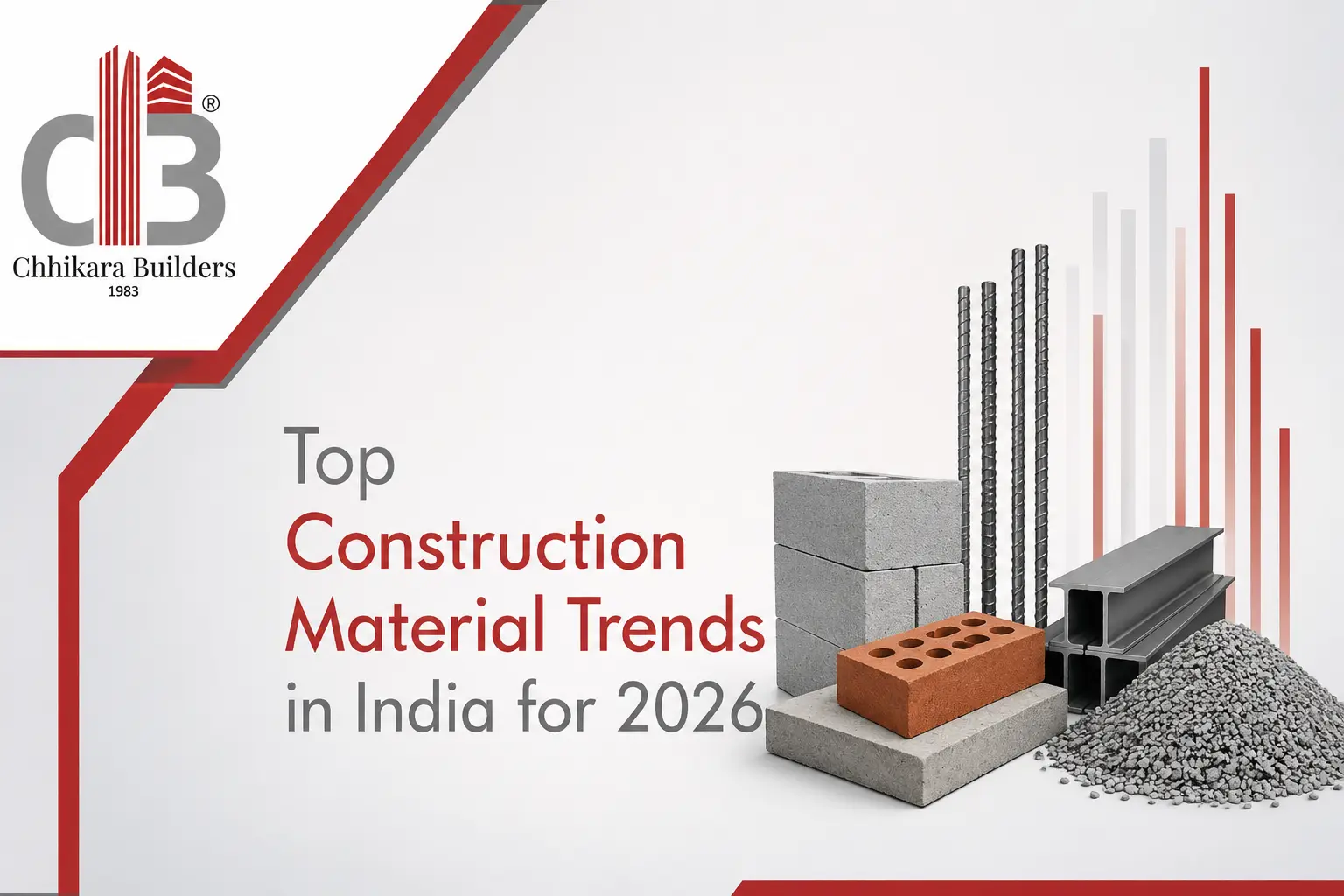
India's construction industry is undergoing a major transformation in 2026. With rapid urbanisation, increasing infrastructure development, stricter environmental regulations, and the adoption of smart technologies, builders and developers are actively seeking innovative construction materials that offer durability, sustainability, and cost efficiency.
Modern construction projects are no longer focused solely on strength and aesthetics. Today's builders prioritise energy efficiency, environmental impact, construction speed, and long-term operational costs. As a result, sustainable construction materials, smart building solutions, and energy-efficient products are becoming essential components of residential, commercial, and industrial projects.
At Chhikara Builders, we continuously monitor industry developments to provide builders, contractors, architects, and developers with high-quality construction materials that align with emerging trends and future construction requirements.
This guide explores the top construction material trends shaping India's building industry in 2026.
Quick Answer: What Are the Top Construction Material Trends in India for 2026?
The biggest construction material trends in India for 2026 include sustainable construction materials, Fly Ash Bricks, AAC Blocks, Ready-Mix Concrete, smart building materials, and energy-efficient construction solutions. These materials help improve building performance, reduce costs, and support environmentally responsible development.
Why Construction Material Trends Matter in 2026
Construction materials account for a significant portion of project costs and directly influence:
- Building lifespan
- Energy consumption
- Construction speed
- Structural strength
- Maintenance expenses
- Environmental impact
Choosing the right materials can improve project profitability while meeting modern sustainability standards.
The Indian Construction Industry in 2026: Key Market Developments
1. Sustainable Construction Materials Are Becoming the New Standard
Sustainability is no longer optional in modern construction.
Builders across India are shifting toward environmentally responsible materials that reduce carbon emissions and conserve natural resources.
Popular sustainable construction materials include:
- Fly Ash Bricks
- AAC Blocks
- Recycled Aggregates
- Green Concrete
- Low-Carbon Cement
These materials reduce environmental impact while maintaining structural performance.
Benefits of Sustainable Construction Materials
- Lower carbon footprint
- Reduced waste generation
- Better energy efficiency
- Compliance with green building standards
- Long-term cost savings
As governments and developers focus on green infrastructure, sustainable materials will dominate future construction projects.
2. Fly Ash Bricks Continue to Replace Traditional Red Bricks
One of the strongest construction trends in India is the increasing adoption of fly ash bricks.
Fly ash bricks are manufactured using industrial by-products, making them more sustainable than conventional clay bricks.
Why Builders Prefer Fly Ash Bricks
- Higher compressive strength
- Uniform shape and size
- Reduced mortar consumption
- Lower water absorption
- Eco-friendly production process
- Cost-effective construction
Fly ash bricks contribute significantly to sustainable construction while improving project efficiency.
Applications
- Residential projects
- Commercial buildings
- Industrial structures
- Boundary walls
- Infrastructure projects
At Chhikara Builders, fly ash bricks remain among the most in-demand products due to their reliability and environmental advantages.
3. AAC Blocks Are Driving Energy-Efficient Construction
Autoclaved Aerated Concrete (AAC) Blocks are rapidly gaining popularity across India.
Their lightweight structure and thermal insulation properties make them ideal for modern buildings.
Advantages of AAC Blocks
- Lightweight construction
- Excellent thermal insulation
- Faster project completion
- Reduced structural load
- Fire resistance
- Sound insulation
AAC blocks significantly reduce energy consumption by maintaining indoor temperatures more efficiently.
Why Developers Choose AAC Blocks
Energy-efficient buildings are becoming a priority in residential and commercial projects.
AAC blocks help:
- Lower electricity bills
- Improve occupant comfort
- Reduce HVAC loads
- Enhance sustainability ratings
This trend is expected to grow significantly in 2026 and beyond.
4. Ready-Mix Concrete (RMC) Is Becoming the Preferred Choice
Traditional site-mixed concrete is gradually being replaced by Ready-Mix Concrete (RMC).
Builders increasingly prefer RMC because it ensures consistent quality and faster construction.
Benefits of Ready-Mix Concrete
- Uniform quality
- Faster placement
- Reduced labor costs
- Improved strength
- Less material wastage
- Better project timelines
Industries Using RMC
- Residential construction
- Commercial complexes
- Infrastructure projects
- Industrial facilities
The demand for ready-mix concrete continues to increase as projects become larger and more complex.
5. Smart Building Materials Are Reshaping Construction
Technology is influencing every aspect of the construction industry.
Smart building materials are designed to improve efficiency, durability, and performance.
Examples include:
- Self-healing concrete
- Smart insulation systems
- Energy-efficient glass
- Advanced waterproofing materials
- High-performance concrete
Benefits of Smart Building Materials
- Improved durability
- Reduced maintenance costs
- Better energy efficiency
- Enhanced occupant comfort
- Longer building lifespan
Smart materials are expected to play a significant role in India's future construction landscape.
6. Energy-Efficient Building Materials Are in High Demand
Energy costs continue to rise across India.
Builders are increasingly selecting materials that improve thermal performance and reduce energy consumption.
Popular Energy-Efficient Materials
- AAC Blocks
- Insulated wall systems
- Reflective roofing materials
- High-performance windows
- Green concrete solutions
Benefits
- Lower electricity costs
- Reduced carbon emissions
- Improved indoor comfort
- Enhanced property value
Energy-efficient buildings are becoming more attractive to homeowners and investors alike.
7. Green Building Materials Support Future Development
Green building materials contribute to healthier and more sustainable environments.
As green building certifications become more common, developers are investing heavily in environmentally responsible products.
Characteristics of Green Building Materials
- Recyclable
- Low emissions
- Energy efficient
- Durable
- Resource conserving
Green construction is expected to become a major driver of India's real estate and infrastructure sectors.
8. Cost-Effective Construction Solutions Remain a Priority
While sustainability is important, cost efficiency remains a critical factor.
Builders seek materials that provide:
- Long-term durability
- Reduced maintenance
- Faster construction
- Lower operational costs
Fly ash bricks, AAC blocks, and ready-mix concrete offer the ideal combination of affordability and performance.
This balance makes them some of the most popular construction materials in India today.
The Future of Construction Materials in India
The future construction industry will focus on three key pillars:
Sustainability
Builders will increasingly adopt eco-friendly materials to reduce environmental impact.
Technology
Smart building materials and digital construction methods will become mainstream.
Efficiency
Energy-efficient and cost-effective solutions will dominate project planning and execution.
Companies that embrace these trends will be better positioned for long-term success.
Why Choose Chhikara Builders?
Chhikara Builders is committed to supporting India's evolving construction industry through high-quality, reliable, and sustainable construction materials.
Our product portfolio includes:
- Fly Ash Bricks
- AAC Blocks
- Ready-Mix Concrete
- Construction Aggregates
- Building Materials
We help builders, developers, and contractors achieve stronger, faster, and more sustainable construction outcomes.
Conclusion
The construction industry in India is entering a new era driven by sustainability, innovation, and efficiency. In 2026, materials such as fly ash bricks, AAC blocks, ready-mix concrete, and smart building products are becoming essential for modern construction projects.
Builders who adopt these trends can reduce costs, improve project performance, meet environmental standards, and deliver superior long-term value.
As the demand for sustainable construction materials continues to grow, partnering with trusted suppliers like Chhikara Builders ensures access to future-ready solutions that support successful building projects.
Frequently Asked Questions (FAQs)
1. What are the top construction material trends in India for 2026?
The leading trends include sustainable construction materials, fly ash bricks, AAC blocks, ready-mix concrete, smart building materials, and energy-efficient construction solutions.
2. Why are fly ash bricks becoming popular in modern construction?
Fly ash bricks offer higher strength, better dimensional accuracy, reduced water absorption, and environmental benefits compared to traditional clay bricks.
3. How do AAC blocks improve energy efficiency?
AAC blocks provide excellent thermal insulation, helping to maintain indoor temperatures and reduce electricity consumption for heating and cooling.
4. What are smart building materials?
Smart building materials are advanced construction products designed to improve durability, energy efficiency, maintenance performance, and building sustainability.
5. Why is sustainability important in the construction industry?
Sustainability helps reduce carbon emissions, conserve resources, minimise waste, and improve energy efficiency, and support environmentally responsible development.