
Quick Answer: What Is the Weight of One Brick?
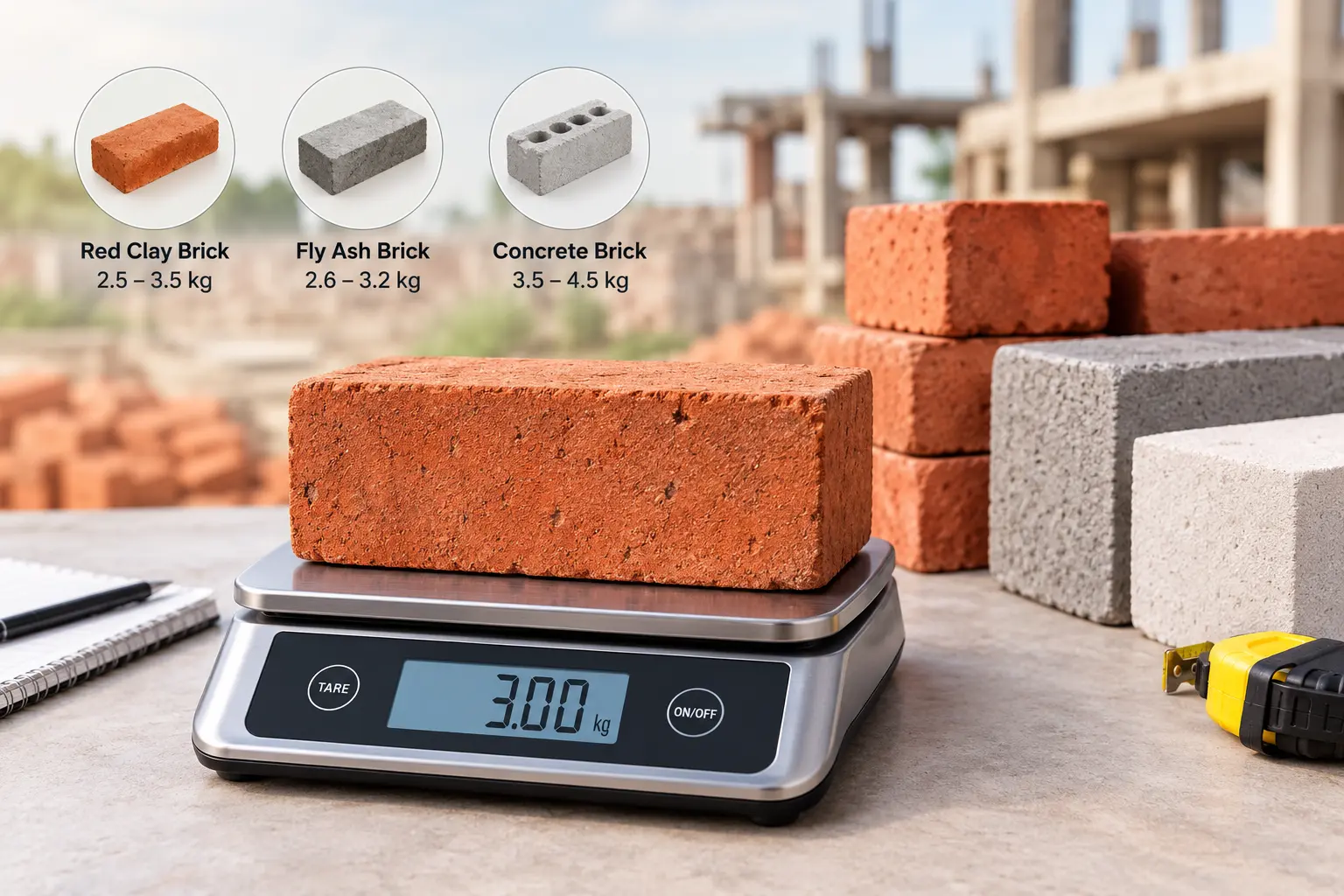
The average brick weight in India is approximately 2.5 kg to 3.5 kg for a common red clay brick. However, the actual weight depends on its size, material, density, manufacturing process, and moisture content.
Different types of bricks, such as red clay bricks, fly ash bricks, and concrete bricks, have different weights. Knowing the weight of one brick helps homeowners, builders, and contractors estimate material quantities, transportation requirements, and construction costs.
For example, if one brick weighs 3 kg, then 1,000 bricks will weigh approximately 3,000 kg, or 3 tonnes. This calculation provides a basic estimate for planning material deliveries.
What Does Brick Weight Mean?
Brick weight refers to how heavy an individual brick is, usually measured in kilograms (kg). Bricks are commonly used to construct walls, boundary walls, partitions, and other building structures.
The weight of a brick depends mainly on its dimensions, material composition, and density. Moisture content and manufacturing methods can also affect the final weight.
For example, two bricks of the same size may have different weights if they are made from different materials. Similarly, a larger brick will generally weigh more than a smaller brick made from the same material and having the same density.
Understanding brick weight helps you compare construction materials and plan the transportation and handling of bricks at a construction site.
Average Brick Weight in KG
The brick weight in kg varies according to the type, size, and material used. Traditional red clay bricks commonly weigh around 2.5 kg to 3.5 kg per piece, although some products may fall outside this range.
The following table provides approximate weight ranges for different types of bricks.
|
Brick Type |
Approximate Weight Per Brick |
|
Red clay brick |
2.5–3.5 kg |
|
Fly ash brick |
2.6–3.2 kg |
|
Concrete brick |
3.5–4.5 kg |
|
Engineering brick |
3–3.8 kg |
Note: These figures are general estimates, not fixed standards. Actual weight varies according to dimensions, material composition, density, and moisture content. Always check the manufacturer's specifications.
Brick weight should not be the only factor when choosing building materials. Strength, water absorption, durability, dimensions, and suitability for the intended application are equally important.
What Is the Weight of One Red Brick?
The red brick weight in India commonly ranges from 2.5 kg to 3.5 kg for conventional red clay bricks. However, the actual weight depends on the brick's dimensions, clay composition, and manufacturing process.
Red clay bricks are widely used in residential construction, boundary walls, and other masonry applications. Their size and density can vary between manufacturers and product specifications.
For example, a larger red brick may weigh more because it contains more material. However, a smaller brick made from denser material may also have a considerable weight.
Before purchasing red bricks, check their dimensions and quality. You can explore the clay bricks product pagefor more information about clay brick options.
Why Does Red Brick Weight Vary?
Several factors affect the weight of red bricks.
- Size: Larger bricks generally contain more material.
- Clay composition: Different clay mixtures can have different densities.
- Manufacturing process: Production methods affect the final properties of the brick.
- Moisture content: Bricks that absorb water may weigh more.
- Internal structure: Differences in porosity can affect the overall weight.
For an accurate comparison, weigh bricks of similar dimensions under similar moisture conditions.
How Does Brick Size Affect Its Weight?
Brick size is one of the main factors affecting weight. A brick with greater length, width, or height generally contains more material and may weigh more than a smaller brick made from the same material.
In India, a commonly used modular brick size is approximately 190 mm × 90 mm × 90 mm before mortar is considered. Its nominal size, including a typical mortar allowance, is approximately 200 mm × 100 mm × 100 mm.
Actual dimensions can vary according to the brick type and applicable specifications. Always confirm the dimensions with your supplier before calculating the required quantity.
How to Calculate Brick Volume
The volume of a rectangular brick can be calculated by multiplying its length, width, and height.
Formula:
Brick volume = Length × Width × Height
For example, consider a brick measuring 190 mm × 90 mm × 90 mm.
Its approximate volume is
190 × 90 × 90 = 1,539,000 mm³
This is equal to approximately 0.001539 cubic metres.
Brick volume helps explain how dimensions affect weight. However, calculating the exact weight also requires information about the material's density and the brick's internal structure.
What Is the Difference Between Brick Weight and Density?
Brick weight and density are related, but they are not the same.
Brick weight describes how heavy an individual brick is. Density refers to the mass of a material per unit of volume and is commonly expressed in kilograms per cubic metre (kg/m³).
A large brick may weigh more than a small brick even if both have the same density. Similarly, two bricks with identical dimensions may have different weights because their materials have different densities.
The basic relationship is:
Mass = Density × Volume
For example, if two bricks have the same volume but one is made from a denser material, the denser brick will generally have a greater mass under similar moisture conditions.
This is why brick size and material density should be considered together when comparing different products.
What Factors Affect the Weight of a Brick?
1. Raw Material
Different raw materials produce bricks with different physical properties. Red clay bricks are primarily made from clay, while fly ash bricks use fly ash and other suitable ingredients. Concrete bricks are generally made from cement, aggregates, and water.
The composition of these materials influences the density, strength, and weight of the finished product.
2. Moisture Content
Bricks can absorb water when exposed to rain or damp conditions. This increases their weight and may affect the consistency of measurements.
For accurate comparisons, weigh bricks under similar moisture conditions. If you are purchasing bricks in bulk, ask the supplier about the product specifications and relevant water absorption information.
3. Manufacturing Process
The manufacturing process affects the dimensions, density, and internal structure of a brick. Differences in raw materials and production methods can lead to variations in weight.
Consistent manufacturing helps maintain uniform dimensions and product quality.
4. Shape and Internal Structure
Not all bricks are solid. Some masonry units contain holes or cavities that reduce their weight or provide other performance benefits.
A hollow brick may weigh significantly less than a solid brick of similar external dimensions. Therefore, check whether a product is solid, perforated, or hollow before comparing its weight with other bricks.
5. Brick Quality
Brick quality affects its suitability for different construction applications. However, a heavier brick is not automatically stronger or better.
When selecting bricks, check their compressive strength, dimensions, water absorption, and other relevant specifications. The right choice depends on the requirements of your construction project.
How to Calculate the Total Weight of Bricks
Calculating the total weight of bricks is simple. Multiply the number of bricks by the average weight of one brick.
Formula:
Total brick weight = Number of bricks × Average weight per brick
Suppose each brick weighs approximately 3 kg. The estimated total weight for different quantities would be as follows.
|
Number of Bricks |
Estimated Total Weight |
|
100 bricks |
300 kg |
|
500 bricks |
1,500 kg |
|
1,000 bricks |
3,000 kg |
|
2,000 bricks |
6,000 kg |
|
5,000 bricks |
15,000 kg |
These calculations assume that every brick weighs 3 kg. Actual totals will vary according to the type, size, and moisture content of the bricks.
Why Is Total Brick Weight Important?
Calculating total brick weight helps builders plan transportation, material handling, and delivery schedules.
It can also help contractors estimate the approximate load of a brick delivery. However, the total transported load may include pallets, packaging, and other materials.
For structural design, the weight of the complete masonry wall must be calculated using the relevant material specifications and construction details. An individual brick weight is not sufficient to determine whether a structure is safe.
How Can You Measure the Weight of One Brick?
You can measure brick weight using a suitable weighing scale.
Follow these steps:
- Select a representative brick from the batch.
- Place the weighing scale on a stable surface.
- Ensure the scale is set to zero.
- Place the brick carefully on the scale.
- Record the weight in kilograms.
- Repeat the process with several bricks to understand variations within the batch.
Measuring multiple bricks gives you a better idea of the average weight than measuring only one brick.
For fair comparisons, use bricks with similar moisture conditions. If you are purchasing large quantities, request product specifications and relevant quality test reports from the supplier.
Why Does Brick Weight Matter in Construction?
Brick weight affects several aspects of construction planning.
Transportation and Delivery
Knowing the approximate total weight helps suppliers and contractors arrange suitable transportation. It also supports delivery planning for large quantities of bricks.
Material Handling
Workers need to move bricks safely around the construction site. Understanding the approximate weight helps with material handling and storage arrangements.
Structural Design
The weight of masonry contributes to the permanent load of a building. Structural engineers consider the weight of walls and other construction materials when designing building components.
However, brick weight alone cannot determine the safety of a wall or building. Proper structural calculations are essential.
Construction Budget
Brick weight can help estimate transport requirements, but it does not determine the total cost of construction.
Other expenses include the price per brick, transportation, labour, mortar, wastage, and unloading charges. These factors should be considered when preparing a construction budget.
What Is the Today Brick Rate in India?
The today brick rate depends on the brick type, quality, dimensions, order quantity, location, and transportation charges.
Red clay bricks, fly ash bricks, and concrete bricks may have different prices. Rates can also vary between local suppliers and regions, so an old online price may not reflect the current market rate.
Before placing an order, compare the price per brick, delivery charges, product specifications, and quantity supplied. Ask the supplier whether the quotation includes transportation and unloading.
You can read the brick rates guide for Gurgaon and Delhi NCR to learn more about the factors that affect brick prices.
Remember that the lowest price does not always represent the best value. Compare product quality, consistency, and suitability alongside the quoted price.
How to Choose Reliable Brick Manufacturers
Choosing reliable brick manufacturers is an important part of planning a construction project. A dependable supplier should be able to explain the product specifications and help you select bricks suitable for your requirements.
Consider these factors before making a purchase:
- Dimensions: Confirm the length, width, and height of the bricks.
- Weight: Check the typical weight and variations between individual units.
- Strength: Request relevant specifications or test results.
- Water absorption: Check whether the bricks meet the requirements for their intended application.
- Price: Compare quotations for similar brick types and quantities.
- Delivery: Confirm the delivery schedule, transportation charges, and unloading arrangements.
- Consistency: Check that the supplied bricks meet the agreed specifications.
If you are comparing suppliers, read our guide to brick manufacturers in Gurgaon for more information about evaluating brick suppliers.
Common Mistakes to Avoid When Comparing Brick Weight
When comparing bricks, avoid relying on weight alone.
1. Assuming all bricks weigh the same: Different materials, dimensions, and manufacturing processes produce different weights.
2. Ignoring moisture content: Wet bricks may weigh more than dry bricks.
3. Confusing weight with strength: A heavier brick is not necessarily stronger. Strength should be evaluated using appropriate specifications and tests.
4. Ignoring dimensions: Two bricks of different sizes cannot be compared fairly by weight alone.
5. Estimating construction costs from weight alone: The total cost also includes brick prices, transport, labour, mortar, and wastage.
Avoiding these mistakes helps you compare products more accurately and plan construction requirements effectively.
Conclusion
The weight of one brick depends on its size, type, material density, manufacturing process, and moisture content. A common red clay brick in India generally weighs around 2.5 kg to 3.5 kg, although actual weights can vary.
Understanding brick weight helps you estimate material quantities, plan transportation, compare construction materials, and prepare project budgets. However, weight should always be considered alongside strength, dimensions, durability, and suitability for the intended application.
Before purchasing bricks, check the product specifications and request current pricing from your supplier. Chhikara Builders can be a starting point for exploring construction material information and planning your requirements.
Chhikara Builders is a construction materials brand. You can visit the Chhikara Builders to explore available information and discuss your construction material requirements.
Frequently Asked Questions (FAQs)
1. What is the average weight of one brick in kg?
A common red clay brick in India generally weighs around 2.5 kg to 3.5 kg. The actual weight depends on its dimensions, material density, manufacturing process, and moisture content. Check the product specifications to determine the actual weight.
2. What is the weight of one red brick in India?
One red brick in India commonly weighs around 2.5 kg to 3.5 kg. Smaller bricks may weigh less, while larger or denser bricks may weigh more. The exact red brick weight varies according to the product and manufacturer.
3. How much do 1,000 bricks weigh?
If each brick weighs approximately 3 kg, then 1,000 bricks weigh around 3,000 kg, or 3 tonnes. This estimate excludes packaging and other materials. For accurate transportation planning, confirm the actual weight with your supplier.
4. Does brick density affect its weight?
Yes. Density refers to the mass of a material per unit of volume. For bricks of the same volume under similar moisture conditions, a higher-density brick generally weighs more than a lower-density brick.
5. How can I check the weight and price of bricks before buying?
You can check brick weight by weighing a sample on a suitable scale and recording the measurement in kilograms. To check the current price, request a quotation from local suppliers or brick manufacturers. Compare dimensions, strength, quality, delivery charges, and the today brick rate before placing your order.