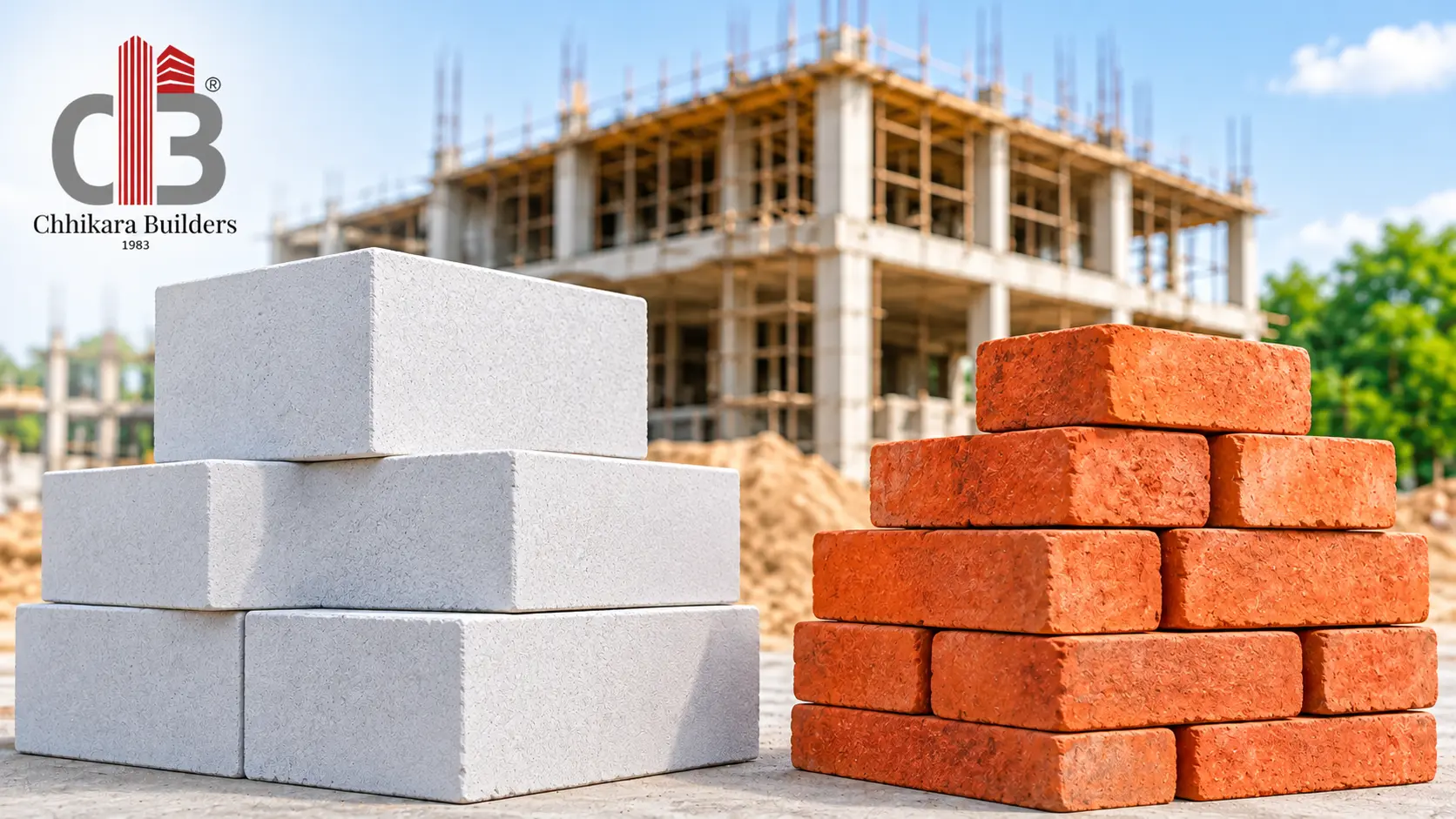
Choosing the right building material is an important decision for any construction project. The materials used for walls affect building strength, thermal insulation, durability, construction speed and overall project costs. Two commonly used options are AAC blocks and traditional red bricks.
When comparing AAC Blocks vs Red Bricks, it is important to understand their composition, weight, compressive strength, water absorption, and installation costs. Both materials have different advantages, and the right choice depends on the building design, construction requirements, and available budget.
Whether you are building a residential house, commercial property, or industrial structure, understanding these differences can help you make a better decision. This article compares AAC blocks and red bricks based on their features, benefits, limitations, strength, and cost.
Quick Answer: AAC Blocks vs Red Bricks
AAC blocks are lightweight construction materials known for their thermal insulation properties, uniform dimensions, and faster installation. Red bricks are traditional clay-based building materials commonly used in residential and commercial masonry.
AAC blocks are generally suitable when lightweight walls, thermal insulation, and faster construction are priorities. Red bricks can be a suitable option when traditional masonry methods and locally available clay bricks are preferred.
The right material depends on the building design, product specifications, construction budget, and recommendations of a qualified professional.
What Are AAC Blocks?
AAC stands for Autoclaved Aerated Concrete. AAC blocks are lightweight construction materials manufactured using cement, lime, sand or fly ash, water and an aerating agent.
During manufacturing, the mixture develops tiny air pockets throughout its structure. The blocks are then cured under high-pressure steam in an autoclave. This process produces lightweight blocks with uniform dimensions and useful insulation properties.
AAC blocks are commonly used for internal and external walls in residential buildings, commercial properties, industrial structures, and high-rise construction.
Main Features of AAC Blocks
- Lightweight structure compared with conventional solid clay bricks.
- Good thermal insulation due to their air-pocket structure.
- Larger dimensions that can reduce the number of masonry units required.
- Uniform dimensions through controlled manufacturing.
- Good fire resistance according to product specifications.
- Compatibility with suitable thin-bed masonry adhesives.
These features make AAC blocks a practical option for projects where lightweight walls, insulation, and construction efficiency are important.
What Are Red Bricks?
Red bricks, also known as clay bricks, are traditional building materials manufactured using natural clay.
The clay is prepared, shaped into individual bricks, and dried and fired in a kiln. The firing process hardens the bricks and gives them their characteristic reddish appearance.
Red bricks have been used in residential houses, boundary walls, commercial buildings, and other masonry construction projects for many years.
Main Features of Red Bricks
- Manufactured using natural clay.
- Available in different grades and sizes.
- Commonly used in traditional masonry construction.
- Familiar installation methods for many contractors.
- Suitable for various residential and commercial applications.
- Performance depends on clay quality and manufacturing processes.
Good-quality red bricks can provide reliable performance when they meet the required specifications and are installed correctly.
AAC Blocks vs Red Bricks: 10 Major Differences
Understanding the differences between these materials helps builders and homeowners select suitable products for their projects.
|
Comparison Factor |
AAC Blocks |
Red Bricks |
|
Raw Material |
Cement, lime, sand, or fly ash |
Natural clay |
|
Manufacturing |
Autoclave curing |
Kiln firing |
|
Weight |
Generally lightweight |
Generally heavier |
|
Dimensions |
Larger block sizes |
Smaller individual units |
|
Thermal Insulation |
Generally better |
Depends on brick type and wall design |
|
Construction Speed |
Often faster installation |
Requires more individual units |
|
Mortar Consumption |
Thin-bed adhesive may be used. |
Conventional mortar generally used |
|
Surface Finish |
Relatively uniform |
Depends on brick quality |
|
Water Absorption |
Porous and needs moisture protection |
Varies with quality |
|
Applications |
Residential, commercial, and industrial walls |
Traditional masonry construction |
Actual performance depends on material quality, wall thickness, workmanship and construction specifications.
AAC Block Strength vs Red Brick Strength
Strength is an important factor when selecting construction materials. However, AAC blocks and red bricks should be compared using tested compressive strength values rather than appearance or weight.
AAC Block Strength
AAC block strength depends on density, raw materials, manufacturing quality, and curing conditions. Different grades are available for masonry applications.
Their lightweight structure can help reduce the dead load of walls, which is useful in many building designs.
Red Brick Strength
Red brick strength depends on clay quality, firing temperature, and manufacturing methods. Properly manufactured clay bricks can provide good compressive strength and durability.
Which Material Is Stronger?
There is no universal answer because the strength of both materials varies according to product grade and manufacturing quality.
Before purchasing, compare:
- Compressive strength in N/mm².
- Material density.
- Water absorption.
- Dimensional accuracy.
- Applicable product standards.
For structural applications, always follow the specifications and recommendations of a qualified structural engineer.
Advantages and Disadvantages of AAC Blocks
AAC blocks offer several benefits for modern construction, but their limitations should also be considered.
Advantages of AAC Blocks
1. Lightweight Construction: AAC blocks are generally lighter than conventional red bricks. Their lower weight can reduce the dead load of masonry walls.
2. Thermal Insulation: Their internal air pockets help reduce heat transfer and can support better indoor temperature management.
3. Faster Construction: Larger block dimensions reduce the number of units required and can speed up wall installation.
4. Fire Resistance: AAC blocks offer good fire resistance because of their mineral-based composition. Actual performance depends on wall thickness and product specifications.
5. Reduced Mortar Consumption: Suitable AAC blocks can be installed using thin-bed adhesive, reducing joint thickness and mortar consumption.
6. Uniform Dimensions: Controlled manufacturing helps maintain consistent block sizes and supports even masonry work.
Disadvantages of AAC Blocks
- Moisture Absorption: AAC blocks are porous and require suitable plastering and waterproofing.
- Careful Handling: Proper loading and unloading help prevent damage and breakage.
- Special Fixings: Heavy fixtures may require suitable anchors designed for AAC masonry.
- Installation Requirements: Correct adhesive application and workmanship are important.
- Transportation: Blocks need careful handling to minimize material wastage.
Benefits and Limitations of Red Bricks
Red bricks remain a popular option because of their established use in traditional masonry construction.
Benefits of Red Bricks
- Widely available in many local markets.
- Familiar installation methods for construction workers.
- Suitable for several residential and commercial applications.
- Good durability when manufactured and installed correctly.
- Available in different grades and qualities.
- Suitable for projects where traditional masonry is preferred.
Limitations of Red Bricks
- Generally heavier than AAC blocks.
- Smaller dimensions increase the number of units required.
- Quality can vary between manufacturers.
- Conventional masonry may require more mortar joints.
- Thermal performance depends on brick type and wall thickness.
- Clay extraction and kiln firing have environmental considerations.
AAC Blocks vs Red Bricks: Which Is More Cost-Effective?
Cost is one of the most important considerations when purchasing construction materials. However, comparing only the purchase price of AAC blocks and red bricks can give an incomplete picture.
The total wall construction cost includes material prices, transportation, labor, mortar or adhesive, plastering, and wastage.
|
Cost Factor |
AAC Blocks |
Red Bricks |
|
Material Cost |
Depends on grade and supplier |
Depends on quality and local availability |
|
Transportation |
Depends on distance and handling |
Depends on distance and quantity |
|
Labour |
May be lower due to larger units |
Depends on masonry requirements |
|
Mortar |
Thin-bed adhesive may reduce consumption. |
Conventional mortar generally required |
|
Plastering |
Depends on surface and workmanship. |
Depends on surface and workmanship. |
|
Wastage |
Careful handling is important. |
Breakage depends on quality and handling. |
AAC blocks may offer savings through faster installation and lower mortar consumption. Red bricks may be economical where local supply is readily available.
For a fair comparison, calculate the completed wall cost per square meter instead of comparing the price of one block with one brick.
AAC Blocks vs Red Bricks for Construction in Gurgaon
Gurgaon and the wider Delhi NCR region have different residential, commercial, and industrial construction requirements. Selecting the right material depends on the building design, site conditions, budget, and availability.
When purchasing AAC blocks or red bricks in Gurgaon, consider these factors:
1. Material Availability: Check whether the required material grade and quantity are available from nearby suppliers.
2. Transportation Costs: Delivery distance and loading and unloading arrangements can affect the final material cost.
3. Construction Requirements: AAC blocks may be suitable when lightweight walls and thermal insulation are priorities. Red bricks can be considered for traditional masonry applications.
4. Product Quality: Check dimensions, compressive strength specifications, and quality documentation.
5. Delivery Planning: Confirm that the supplier can arrange the required quantity according to the construction schedule.
Comparing these factors helps builders and homeowners make informed purchasing decisions.
Fly Ash Bricks vs Red Bricks: Another Construction Option
Fly ash bricks are another commonly used construction material. They are manufactured using fly ash, cement or lime, sand, and other suitable ingredients.
These bricks are formed and cured under controlled manufacturing conditions.
|
Comparison Factor |
Fly Ash Bricks |
Red Bricks |
|
Main Material |
Fly ash-based mixture |
Natural clay |
|
Manufacturing |
Moulding and curing |
Shaping, drying, and kiln firing |
|
Dimensions |
Generally uniform when quality-controlled |
May vary |
|
Surface Finish |
Often relatively smooth |
Depends on quality |
|
Weight |
Depends on size and composition |
Depends on size and composition |
|
Environmental Considerations |
Can utilize industrial by-products |
Involves clay extraction and kiln firing |
Fly ash bricks can be considered when uniform dimensions and the use of industrial by-products are priorities. Their strength and water absorption should also be checked before purchase.
Which Is Better for House Construction: AAC Blocks or Red Bricks?
The best material for house construction depends on wall requirements, building design, local availability, and the overall project budget.
Choose AAC Blocks When:
- Lightweight construction is important.
- Thermal insulation is a priority.
- Faster wall installation is required.
- Uniform block dimensions are preferred.
- Suitable installation materials and workmanship are available.
Choose Red Bricks When:
- Traditional clay masonry is preferred.
- Quality bricks are readily available locally.
- The project follows conventional masonry methods.
- The selected brick specifications meet design requirements.
Consider Fly Ash Bricks When:
- Uniform masonry units are required.
- A fly ash-based construction material is preferred.
- The available product meets the required specifications.
Always consult a qualified construction professional before finalizing materials for your building.
How to Choose a Reliable Construction Material Supplier
Selecting a dependable supplier is just as important as selecting the right material. Product quality and timely delivery can affect construction planning and project costs.
Before placing an order, check:
- Product Quality: Check material dimensions and manufacturing consistency.
- Strength Specifications: Request relevant compressive strength test reports.
- Quality Documentation: Verify applicable standards and certificates.
- Pricing: Compare material prices and delivery charges.
- Availability: Confirm the required quantity is available.
- Transportation: Check loading, unloading, and delivery arrangements.
- Supplier Experience: Consider the supplier's manufacturing and supply experience.
Working with an experienced supplier can make construction material procurement easier.
Chhikara Builders: Construction Material Supplier in Gurgaon
Chhikara Builders is a family-owned construction materials business established in 1983 by Patwari Chander Bhan Chhikara. With more than 40 years of experience, the company has developed its business around brick and block manufacturing and construction material supply.
The company serves residential, commercial, and industrial construction requirements in Gurgaon and surrounding Delhi NCR areas.
Its product range includes clay bricks, fly ash bricks, fly ash blocks, and other construction materials.
Buyers can compare available products, specifications, quality, and delivery requirements before selecting materials for their projects.
Frequently Asked Questions
1. Which is better, AAC blocks or red bricks?
AAC blocks are generally preferred for lightweight walls and thermal insulation, while red bricks are commonly used for traditional masonry. The right option depends on project requirements and material quality.
2. Are AAC blocks stronger than red bricks?
Strength depends on product grade and manufacturing quality. Compare the compressive strength test reports of both materials before selecting one.
3. What are the main advantages and disadvantages of AAC blocks?
AAC blocks offer lightweight construction, thermal insulation, uniform dimensions and faster installation. Their limitations include moisture absorption, careful handling and specialised fixing requirements.
4. Are AAC blocks more economical than red bricks?
AAC blocks may reduce labour time and mortar consumption, while red bricks may have lower purchase prices in some locations. Compare the total completed wall cost before deciding.
5. Which material provides better thermal insulation?
AAC blocks generally provide better thermal insulation than conventional solid clay bricks of comparable wall thickness. Actual performance depends on density and wall design.
6. Can AAC blocks be used for external walls?
Yes. AAC blocks can be used for external walls when suitable product specifications, structural design, plastering, and moisture protection measures are followed.
7. What is the difference between fly ash bricks and red bricks?
Fly ash bricks are manufactured using fly ash-based mixtures, while red bricks are made from natural clay. Their manufacturing processes and material properties differ.
8. How can I calculate the cost of AAC blocks and red bricks?
Calculate the cost based on wall area, material quantity, transportation, labor, mortar or adhesive, plastering, and wastage. Comparing completed wall costs gives a more accurate estimate.
Conclusion
The comparison of AAC Blocks vs Red Bricks shows that both materials have different benefits and applications.
AAC blocks are useful for projects where lightweight walls, thermal insulation, uniform dimensions, and faster installation are important. Red bricks remain a widely used option for traditional masonry construction. Fly ash bricks also provide another alternative for suitable building applications.
Before choosing any material, compare strength, quality, weight, cost, transportation, and installation requirements.
Chhikara Builders brings more than 40 years of experience in brick and block manufacturing and construction material supply. Contact the team to discuss your building material requirements and plan your next construction project.