
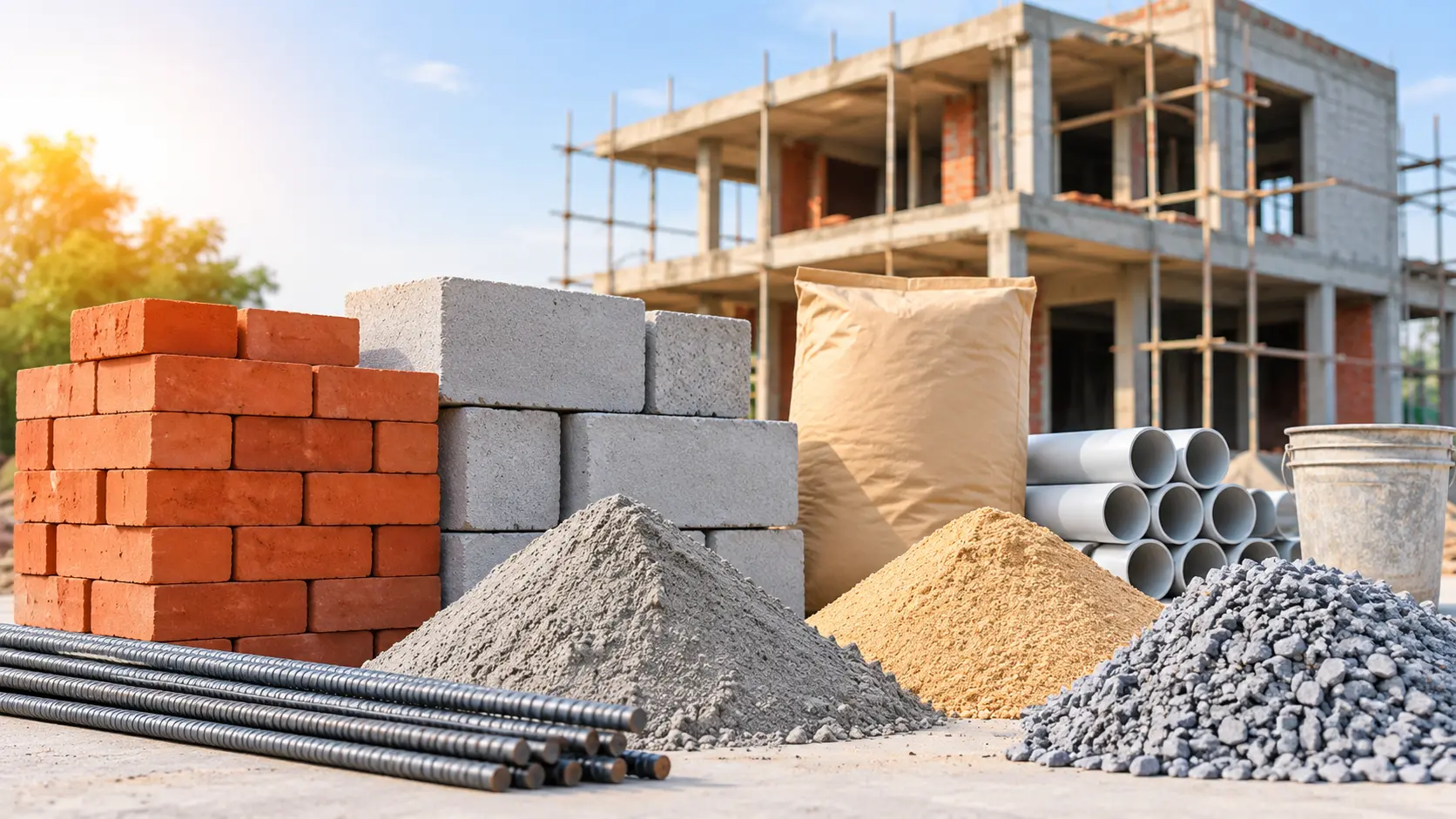
Building a house requires careful planning, the right construction materials, and proper execution at every stage. From preparing the foundation to completing walls, roofing, and flooring, each material has a specific purpose in creating a strong and durable structure.
Before starting a construction project, homeowners should understand the different building construction materials, their uses, and the quantities required. Having a clear construction materials list also helps with budgeting, purchasing, and reducing unnecessary material wastage.
In this guide, we will explore the important construction materials, their applications, and the factors to consider when selecting materials for house construction.
Quick Answer: What Are the Main Construction Materials Required for a House?
The main construction materials required for a house include cement, sand, TMT steel bars, concrete, aggregates, red bricks, fly ash bricks, AAC blocks, and water. Additional materials such as wood, plywood, tiles, marble, granite, and waterproofing products are used for finishing. The exact materials and quantities depend on the building design, structural plan and construction requirements.
What Are Construction Materials?
Construction materials are the products and substances used to build residential, commercial, and industrial structures. They are required for different components, including foundations, columns, beams, walls, roofs, floors, and finishing work.
These materials can be natural, such as stone and timber, or manufactured, such as cement, steel, concrete blocks, and bricks.
The right selection depends on the building design, soil conditions, structural requirements, local climate, and available budget.
Complete Construction Materials List for a House
A typical house requires several materials at different stages of construction. The following building materials list provides an overview of commonly used products.
1. Cement
Cement is one of the most important materials required for house construction. It acts as a binding material in concrete and mortar.
It is commonly used for:
- Foundation and structural concrete
- Brick and block masonry
- Plastering
- Flooring and other finishing work
The cement type and grade should be selected according to the construction specifications and engineer's recommendations.
2. Sand
Sand is used in concrete, mortar, plastering and other construction activities. It helps improve the workability and composition of construction mixes.
Common options include:
- River sand
- Manufactured sand (M-sand)
Sand quality, grading and cleanliness are important. The correct type should be selected according to its intended application.
3. Bricks
Bricks are commonly used to construct walls, partitions and other masonry structures. They are available in different materials and manufacturing types.
Common options include:
- Red Clay Bricks: Made from natural clay and fired in kilns.
- Fly Ash Bricks: Manufactured using fly ash and other suitable binding materials.
- Concrete Bricks: Made from cement, aggregates and water.
The selection should depend on wall design, strength requirements, availability and construction specifications.
4. AAC Blocks
Autoclaved Aerated Concrete (AAC) blocks are lightweight masonry units used for internal and external walls.
They are manufactured using cement, lime, silica-rich materials and other ingredients through an autoclaving process.
Some common benefits include:
- Lower weight compared with conventional clay bricks
- Larger block dimensions
- Easier handling and installation
- Thermal insulation properties
AAC blocks should be selected according to the project's structural and technical requirements.
5. Steel and TMT Bars
Steel reinforcement is used in reinforced cement concrete (RCC) structures to help resist tensile forces.
TMT bars are commonly used in:
- Foundations
- Columns
- Beams
- Roof slabs
- Other reinforced concrete elements
The required steel grade, diameter and quantity should follow the structural drawings and applicable standards.
6. Concrete and Aggregates
Concrete is a mixture of cement, water, fine aggregate and coarse aggregate. It is widely used in foundations, columns, beams, slabs and other structural components.
Aggregates generally include:
- Coarse aggregates such as crushed stone
- Fine aggregates such as suitable sand
Aggregate quality and grading affect the workability, strength and durability of concrete. The concrete mix should be designed according to the project's requirements.
7. Stone Dust
Stone dust is a by-product of stone crushing and is used in selected construction applications, depending on its grading and quality.
It may be used in:
- Certain concrete and mortar mixes
- Filling and levelling work
- Paver block manufacturing
- Other approved construction applications
Its suitability depends on the intended use and technical specifications.
8. Water
Water is essential for preparing concrete and mortar, mixing construction materials and curing concrete.
Water used in construction should be suitable for the intended application. Contaminated water can affect cement hydration and the quality of concrete.
9. Wood and Plywood
Wood and plywood are used for temporary and permanent construction purposes.
Common applications include:
- Shuttering and formwork
- Doors and windows
- Cabinets and interior fittings
- Furniture and decorative work
The material should be selected according to its exposure, strength and intended use.
10. Tiles, Marble and Granite
These materials are mainly used for flooring, wall cladding, kitchen platforms, staircases and decorative finishes.
Common options include ceramic tiles, vitrified tiles, marble and granite. Selection depends on appearance, maintenance, durability, water exposure and budget.
Types of Building Materials Based on Their Uses
Understanding the types of building materials becomes easier when they are grouped according to their construction applications.
|
Construction stage |
Common materials |
Main purpose |
|
Foundation |
Cement, steel, concrete, aggregates |
Supporting the building structure |
|
Wall construction |
Red bricks, fly ash bricks, AAC blocks |
Building walls and partitions |
|
RCC work |
Cement, TMT bars, sand, aggregates |
Constructing beams, columns and slabs |
|
Plastering |
Cement, sand, water |
Creating smooth wall surfaces |
|
Flooring |
Tiles, marble, granite |
Floor finishing |
|
Doors and windows |
Wood, aluminium, glass |
Access, ventilation and natural light |
|
Roofing |
Concrete, steel and waterproofing materials |
Roof construction and protection |
The exact materials required will vary according to the architectural design and structural plan.
How to Choose the Right Building Construction Materials
Choosing materials based only on price can create problems during construction. Consider these factors before purchasing:
1. Quality and Strength
Check the quality, specifications and suitability of materials. For structural applications, follow the engineer's recommendations.
2. Project Requirements
Different materials serve different purposes. A material suitable for internal partitions may not be appropriate for a load-bearing structure.
3. Budget and Availability
Compare prices from reliable suppliers and consider transportation costs, delivery schedules and material wastage.
4. Durability and Weather Conditions
Consider the local climate, moisture exposure and environmental conditions when selecting materials.
5. Supplier Reliability
Choose suppliers who can provide consistent material quality, clear specifications and timely delivery.
Why Is a Proper House Construction Materials List Important?
Preparing a detailed house construction materials list before starting work helps homeowners and contractors organise the project more efficiently.
It can help with:
- Estimating the overall construction budget
- Planning material purchases
- Avoiding unnecessary stock
- Reducing construction delays
- Comparing supplier quotations
- Monitoring material consumption
However, the actual quantities cannot be determined accurately without details such as plot dimensions, built-up area, number of floors, structural drawings and material specifications.
How to Calculate Construction Materials Required for a House
Construction material quantities depend on the built-up area, number of floors, foundation design, wall thickness, and structural specifications.
Before purchasing materials, consider these steps:
- Calculate the total built-up area.
- Review the architectural and structural drawings.
- Identify the materials required for each construction stage.
- Estimate cement, sand, steel, bricks, blocks, and aggregates separately.
- Include transportation, storage, and reasonable wastage allowances.
- Get the final quantity estimate checked by an engineer or quantity surveyor.
Avoid using a general per-square-foot estimate as the final quantity calculation because actual requirements vary between projects.
Chhikara Builders: Construction Material Supply in Gurgaon
Chhikara Builders supplies construction materials in the Gurgaon region, including red bricks, fly ash bricks, and AAC blocks.
Selecting suitable materials from a reliable supplier is an important part of planning any construction project. Before placing an order, buyers should confirm product specifications, quantities, transportation arrangements, and delivery schedules.
Whether you are planning a residential building or another construction project, understanding your material requirements can help you make more informed purchasing decisions.
Conclusion
A well-planned construction materials list makes house construction easier to organise and manage. Cement, sand, steel, concrete, bricks, AAC blocks, aggregates and finishing products all contribute to different parts of a building.
The best materials depend on the project's design, structural requirements, budget and local conditions. Always consult a qualified engineer or construction professional before finalising materials for structural work.
Frequently Asked Questions
1. What are the main construction materials required for a house?
The main materials include cement, sand, steel, concrete, bricks, AAC blocks, aggregates, water, wood and finishing materials such as tiles and granite.
2. What is included in a building materials list?
A building materials list generally includes materials for foundations, RCC work, walls, plastering, flooring, roofing, doors, windows and finishing.
3. Which materials are used for house wall construction?
Common wall construction materials include red clay bricks, fly ash bricks, concrete blocks and AAC blocks. The correct option depends on the building design and structural requirements.
4. What are the different types of building materials?
Building materials can include cement-based materials, metals, masonry products, timber, natural stone, aggregates, glass and finishing products.
5. How can I estimate the material required for house construction?
Material requirements depend on the built-up area, number of floors, structural drawings, wall thickness, concrete specifications and finishing choices. A qualified engineer or quantity surveyor can prepare a detailed estimate.
6. Which Bricks Are Best for House Construction?
Red clay bricks, fly ash bricks and AAC blocks are commonly used for house construction. Each has different properties, weight and installation requirements. The best option depends on the building design, wall application, structural specifications, local availability and budget. Consult your engineer before selecting the material.
7. Where Can I Buy Construction Materials in Gurgaon?
Homeowners and contractors can source construction materials from local suppliers in Gurgaon. Before purchasing, compare product specifications, quality, pricing and delivery arrangements. Chhikara Builders supplies red bricks, fly ash bricks and AAC blocks in the Gurgaon region.